Introduction
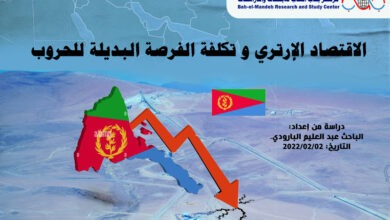
Before studying the state of the Eritrean economy, it is important and necessary to present the economic concepts related to the subject in detailed headings. This is important because it provides academic bases for studying the state of the Eritrean economy in a way that can be agreed upon on common grounds of reference. As for the necessity, it stems from the fact that these rules constitute the framework that guides the approach and course of the study. This study is not intended to fully assess or critically analyze the Eritrean economy to provide plans and solutions. Rather, it is a modest attempt to understand its problems, and draw the attention of those interested to some of the real reasons that impede its development and growth.
Eritrea is a small country strategically located in the northern part of Africa known as the Horn of Africa. It is bordered by the Red Sea on its eastern coast, Sudan to the west and north, Ethiopia to the south, and Djibouti on its far southeastern edge. Eritrea has a surface area of about 125,000 square kilometers, with a coastline of around 1,200 kilometers and has 354 islands in the Red Sea. Based on 2019 data it has a population of around 5.35 million with a rapid population growth rate of 2.35% per year and a very high fertility rate of 4.13 births per woman. Although there are no official geological survey reports, it is largely believed that the country possesses abundant mineral resources of various kinds.